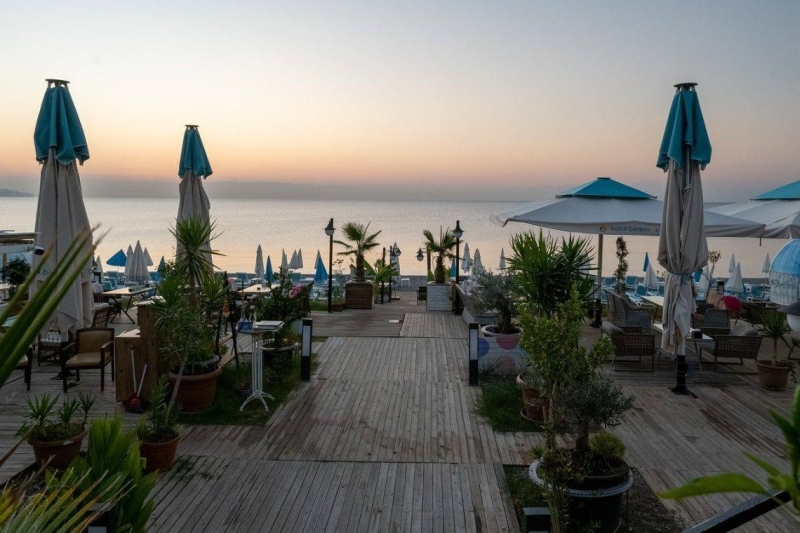

… And on the 10th day of our trip to Qatar, the war in The Persian Gulf. We were sitting on the Doha Sands beach (a dozen meters from the Iranian embassy) when the first explosions thundered in the distance, and all the phones around suddenly started bursting with security alerts. As a result, instead of 10 days, our trip took twice as long. But you probably already know about the events in the Middle East without me. I didn’t want to write about it, but not saying a word at all was also somehow wrong.
If you want to talk about it, welcome to the comments. Well, today I’m going to tell you a little bit about something else – about how I remember the capital of Qatar.
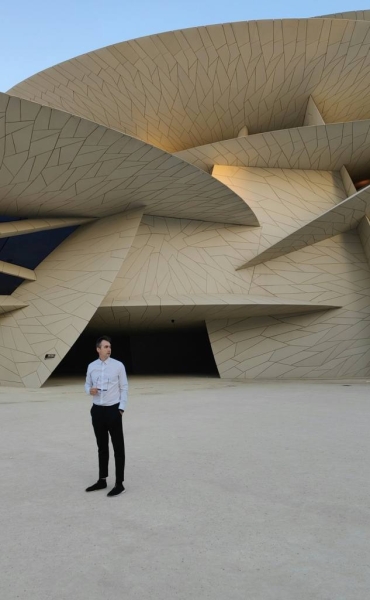
It will be a story about sparkling skyscrapers, Michelin-starred restaurants, colorful markets, state-of-the-art (and often free) museums, as well as mosques that look like spaceships, viewing platforms with the most stunning views and other iconic places in the city. In general, today we will talk about the sights of Doha (and Dubai for a healthy person). I was impressed by this city, and I will try very hard to infect you with this feeling.
The Msheireb quarter and the European heart of Doha
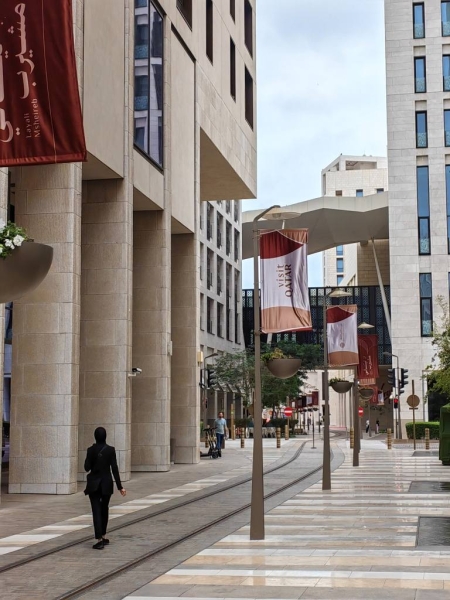
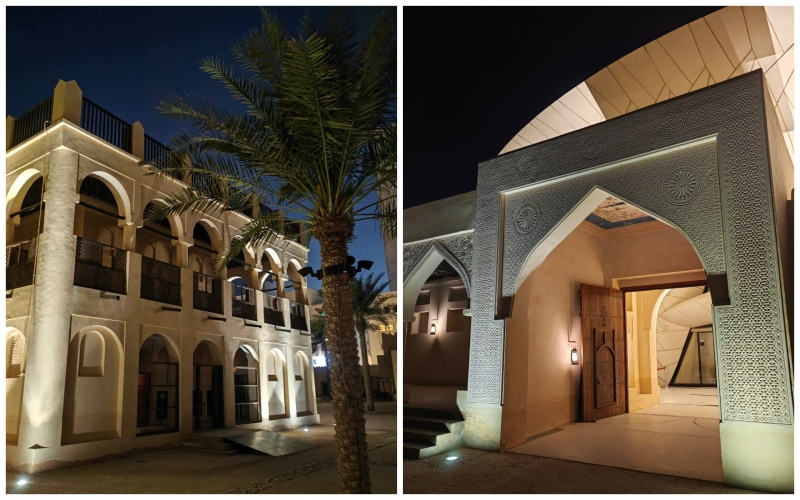
I’ll start with him, because it was this place in Doha that surprised me the most. Imagine a traditional city in the Middle East. Here you expect to see mosques, bazaars or fancy skyscrapers at the very least. But Msheireb is not like that at all. This is the new “downtown” of Doha, built in the European manner – with pedestrian zones, stylish coffee shops and waterfalls inside the underpasses.
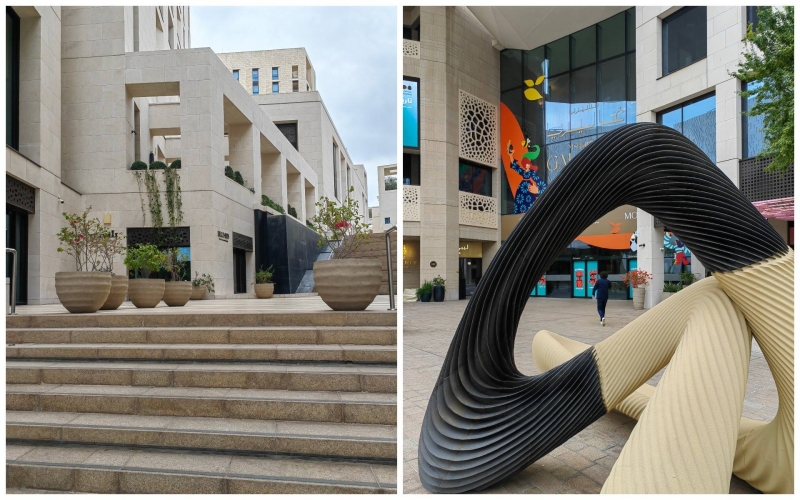
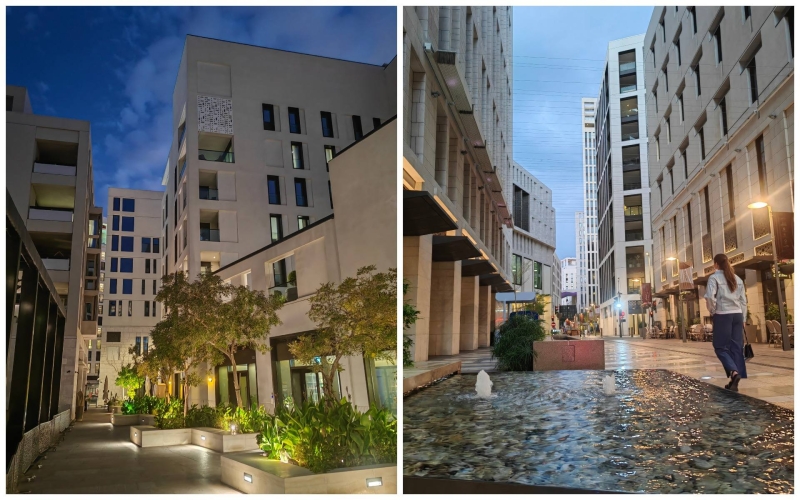
Part of the former buildings that stood here in the old days They were also carefully preserved – today there are four free museums in them.
- Bin Jelmud House explores the history of slavery and its impact on the region.
- The Company’s House talks about the discovery of oil and how this event changed Qatar.
- The Radwani House reflects the way of life of families in the “pre-oil era”.
- And the Mohammed Bin Jassim House shows the evolution of life in Doha from old customs to modern urbanization.
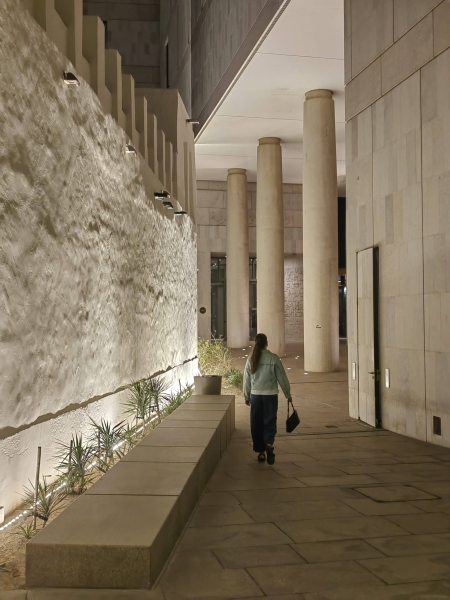
There are several mosques in the quarter, but otherwise Msheireb is an absolutely European neighborhood, which is easier to imagine somewhere in the center of Warsaw than in the Middle East. There’s a free tram running through the streets, and there are some amazing examples of modern art hiding around every corner. There are a lot of cool restaurants, a lot of pleasant, but not pretentious architecture, and public spaces are designed in such a way that you want to linger in them. Literally every little thing here – from stairs and street fountains, to lawns and playgrounds – has been turned into an object of art. During the 20 days that we spent in Qatar, Msheyreb became one of my 2-3 favorite areas of Doha.
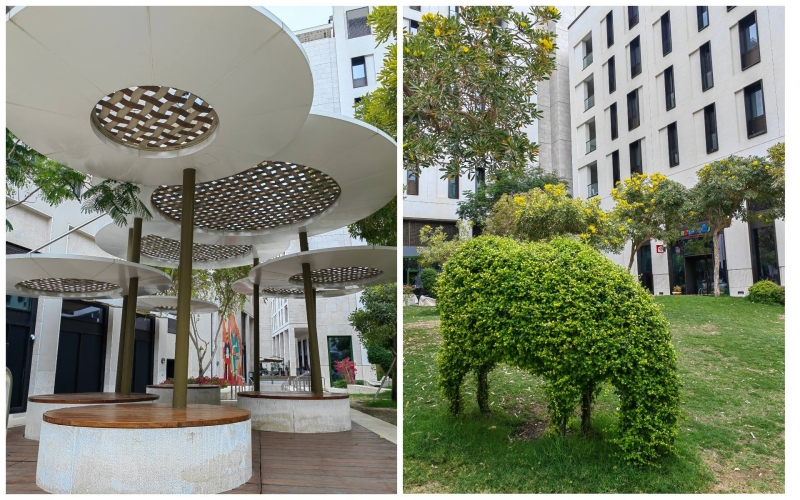
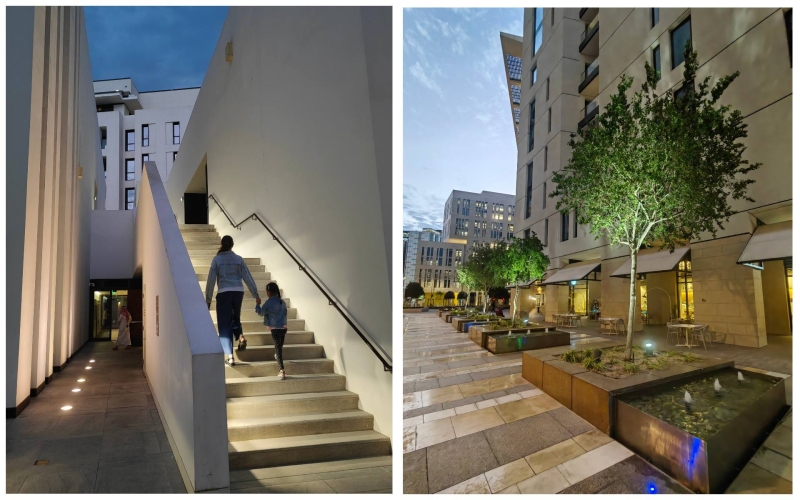
How to get there? By metro – to Msheireb station (via the red, green or golden line).
An example of a hotel in this part of the city is the Alwadi Hotel Doha.
Souk Waqif market, like a little trip to the past
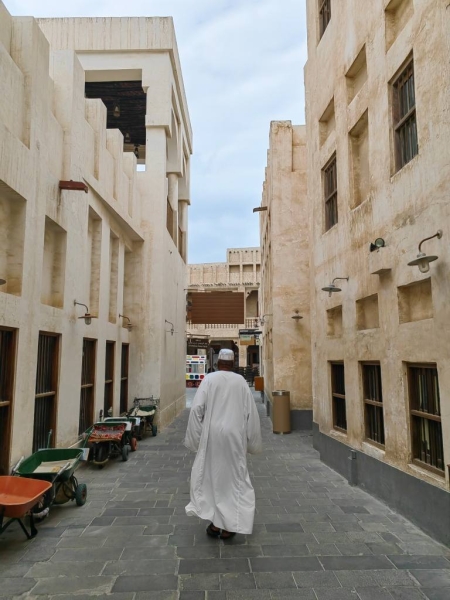
Surprisingly, just 7 hundred meters from the Msheireb quarter there is an island of the traditional East – the old market Souq Waqif. You dive into the passage, cross over to the other side of the road, and the new European neighborhood is replaced by narrow clay streets and long labyrinths of galleries filled with the aromas of Arab oils.
Souk Waqif Market has several local attractions of its own, such as:
- “Golden Finger” by Cesar Baldaccini;
- Or the spiral Fanar Mosque..
But most of all, this place impresses with its general atmosphere.
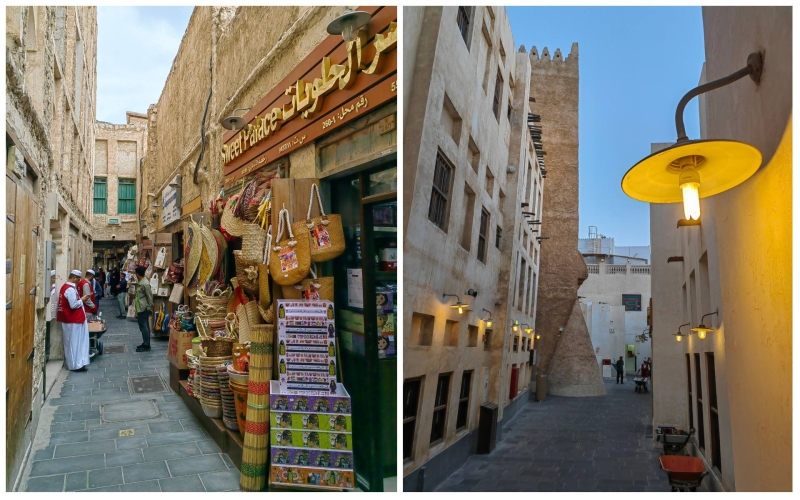
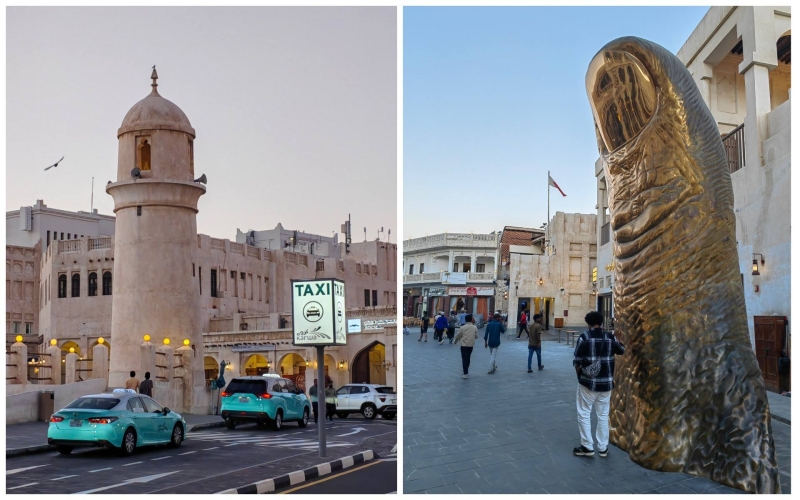
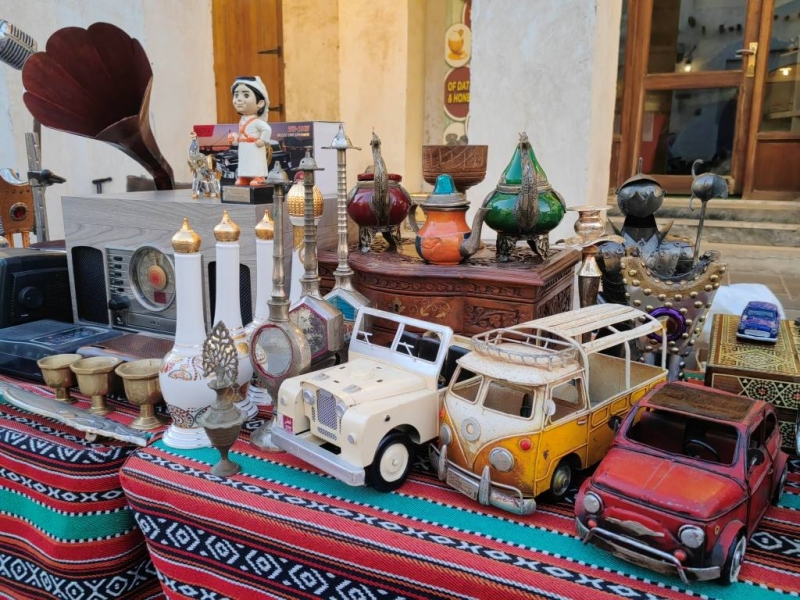
It all starts with stalls where women sell unleavened tortillas made from wheat flour (5 QAR). And it continues with countless Oriental clothing shops, Arab blade shops, musical instrument shops and antique flea markets.
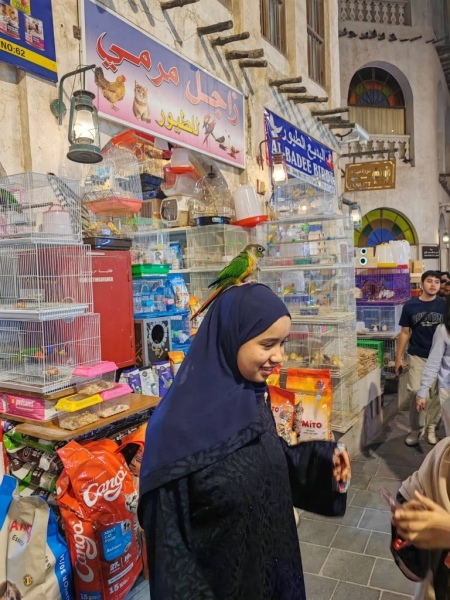
If you find yourself here with children, be sure to visit the bird market with hundreds of parrots, ducks and pigeons. I read somewhere that falcons and other hunting birds used to be sold here, but in 2026 I didn’t see anyone more belligerent than turtles here.
Of course, there are also a couple of free museums on the market, like the Al–Qutah Fort or the local Art center. Inside there are paintings by local artists. But most of all, I liked the ceiling in this place – in the light of colorful “Turkish” lamps, it looked magical in an oriental way.
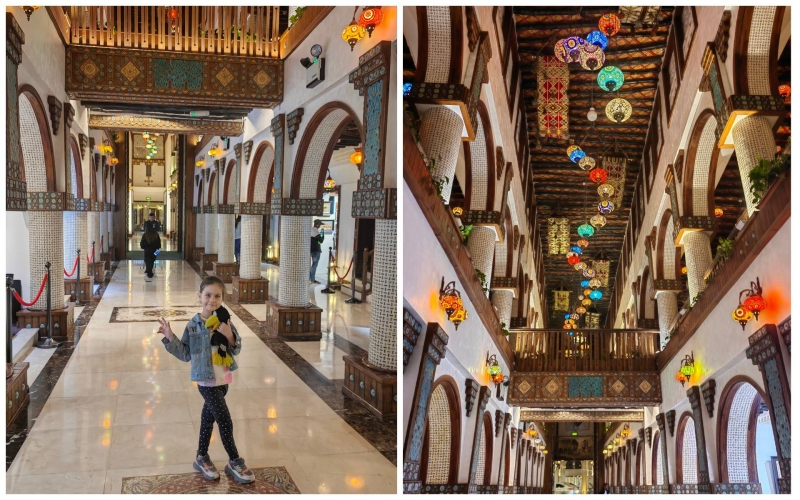
In general, the Souk Waqif market is a whole world with its own secrets and secrets. If you want to get to know it better, you can walk here with a guide. Russian-language excursions can be viewed here (although they are quite expensive). But if English suits you, then prices are noticeably more pleasant on this site.
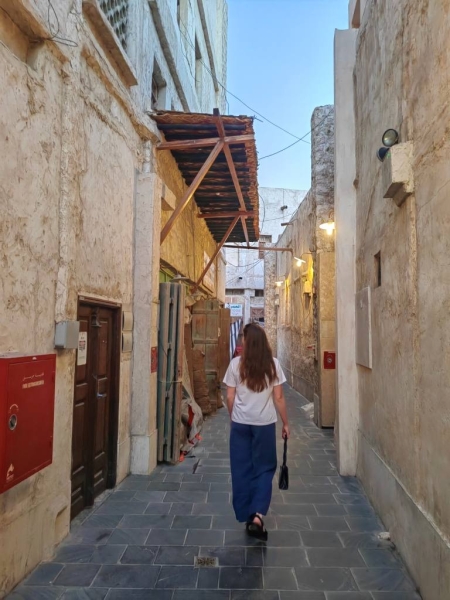
How to get there? Take the subway to Souq Waqif station of the golden line.
An example of a hotel in this part of the city is Al Jomrok Boutiq hotel.
Persian Gulf cruises and the most beautiful view of Doha
From Souq Waqif Market, head towards the Corniche, which offers stunning views of Doha’s most famous skyscrapers. In the evening, the entire bay is awash in lights – and these views are simply breathtaking.
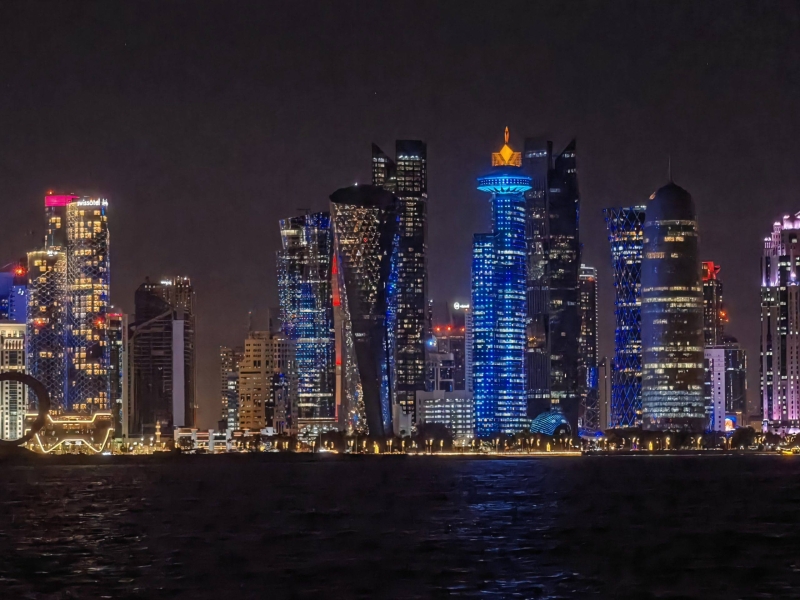
You can admire this beauty from the long pier (behind the BELHAMBAR restaurant). Or you can rent a boat right at the marina to view the city from the water. The usual price is 20 reais for a 20–minute cruise. But if you can bargain (and have the charm of a Pikachu), you can knock her down a little more.
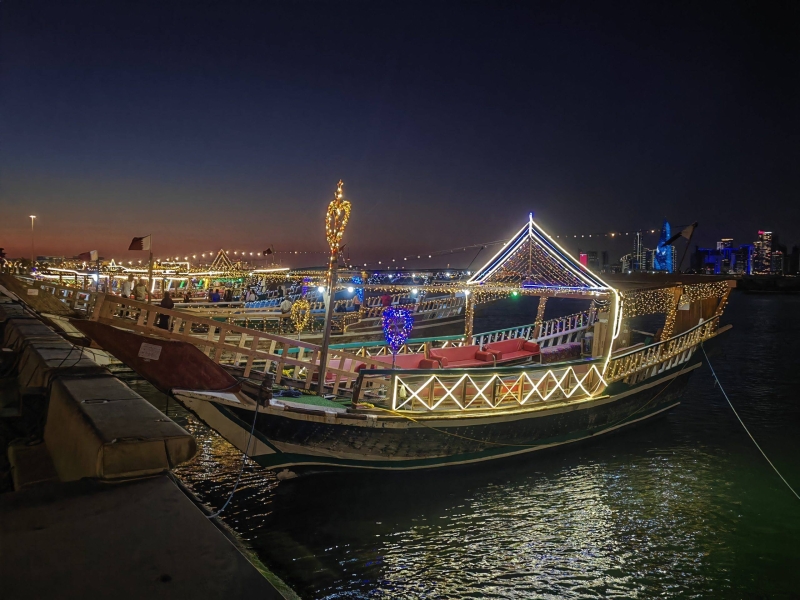
There is only one main disadvantage here – it is a light madhouse that often reigns on board during walks around the Bay. Therefore, as an alternative, you can also view cruises from the official Doha Tourism agency. The prices there are almost the same, but you won’t see any fireworks from chips and Indian discos on board.
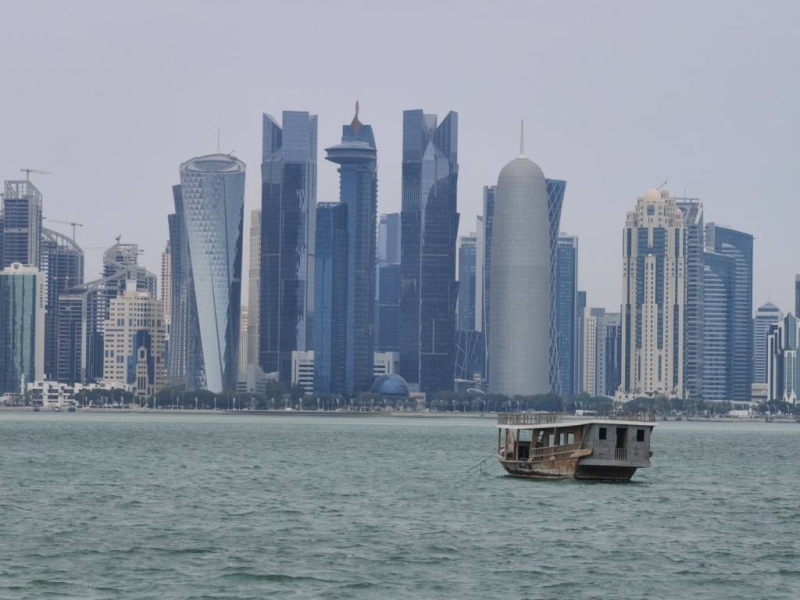
How to get there? Walking distance from Souk Waqif market. You can use a fountain in the form of a huge pearl as a reference point. It is marked in MAPS.me and other navigators.
The West Bay area and Richard Orlinsky’s Congas
Of course, you can look at the sparkling skyscrapers in another way – by going down to the subway and reaching the DECC station. That’s where the West Bay area begins, where embassies, ministries, business centers and many first-class hotels in Doha are located.
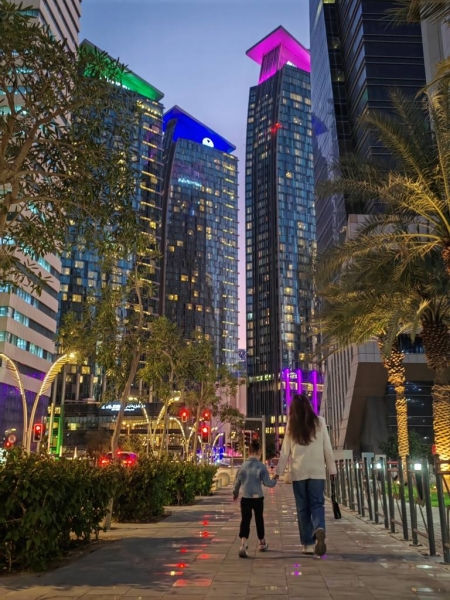
You can wander here (especially in the evening) without any purpose – just looking at the skyscrapers above your head. But if you need some guidance, then here are some ideas for a walk.
Walking through the streets of West Bay…
- Find the Waldorf Astoria skyscraper, as if it came down from the pages of the first Batman comics;
- And Richard Orlinsky’s famous “Congas”.
(Two of them are located at the City Center shopping center, and another one is opposite the Marriott Tower).
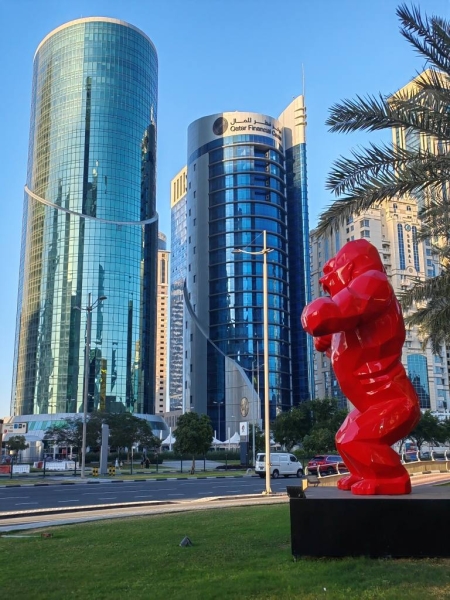
There is also the skyscraper of the International Trade Center (with a “flying saucer” on the roof) and the Al Dana tower, which seems to have a huge ball stuck in it.
Another interesting point on the map of the West Bay area is the local Hotel Park near the Sheraton Hotel. There are playgrounds for children, a beautiful area with glowing fountains and an observation deck on a hill with stunning views of the skyscrapers of Doha.
How to get there? By subway to DECC or West Bay stations.
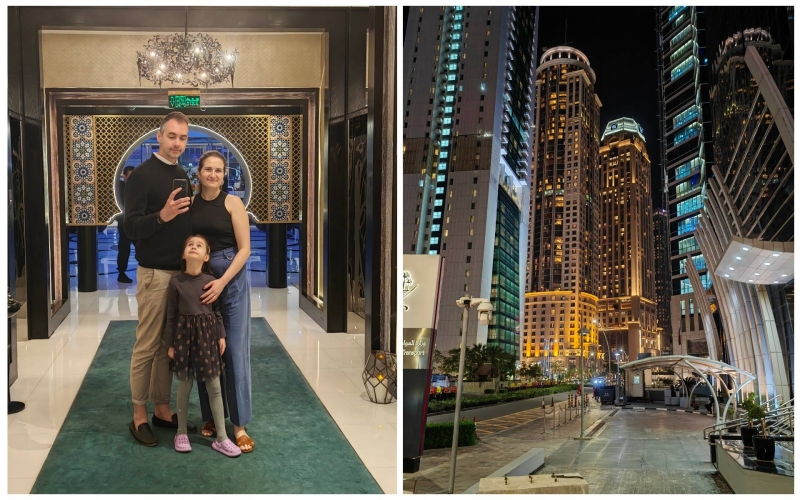
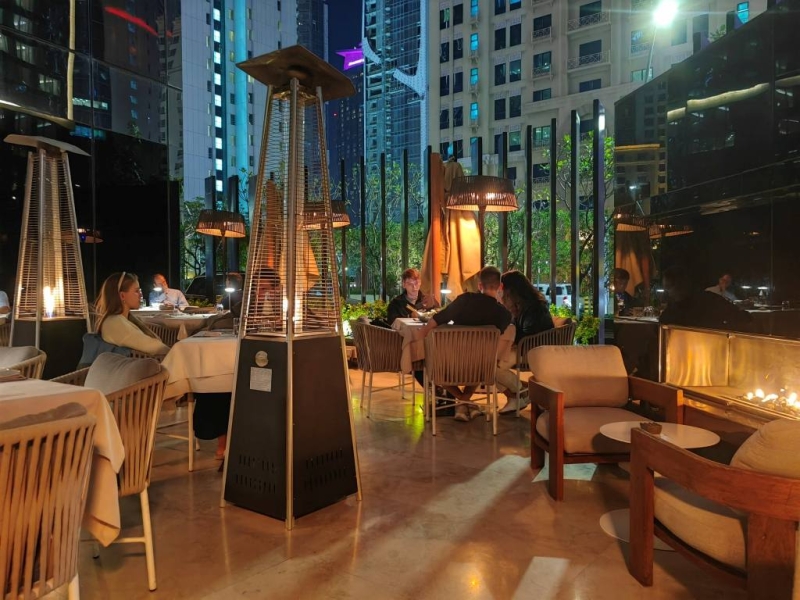
Where to stay? At the W Doha Hotel. There’s a great restaurant here, and it’s also close to the subway and the beach.
Qatari Venice and Doha shopping malls
Another attraction of Doha and the West Bay area is the huge City Center shopping center, from where our friends massively stole game consoles, branded shoes and European cosmetics.
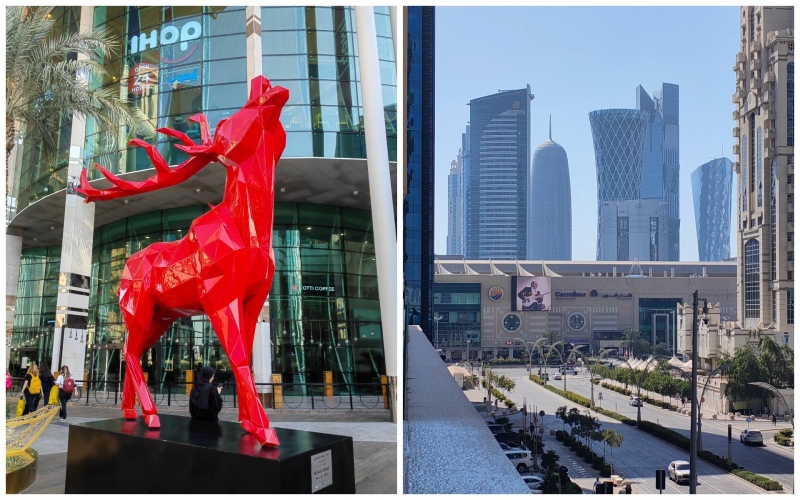
But even if you are not a big fan of shopping, you should still pay attention to the shopping malls of Doha.
- You can come to the Place Vendome shopping center for a beautiful fountain show;
- And in Villaggio Mall – for the sake of the “Venetian” canals and streets in the Italian style.
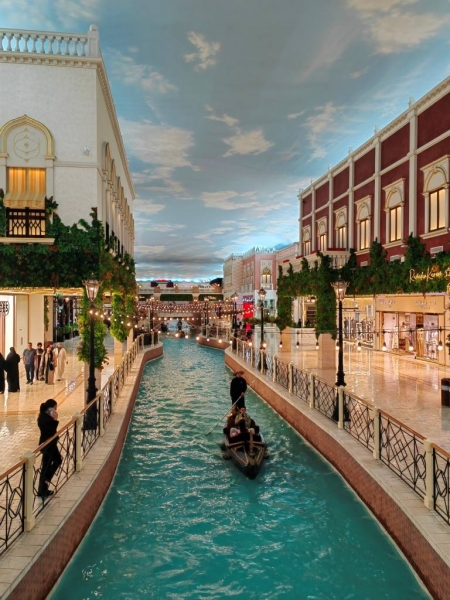
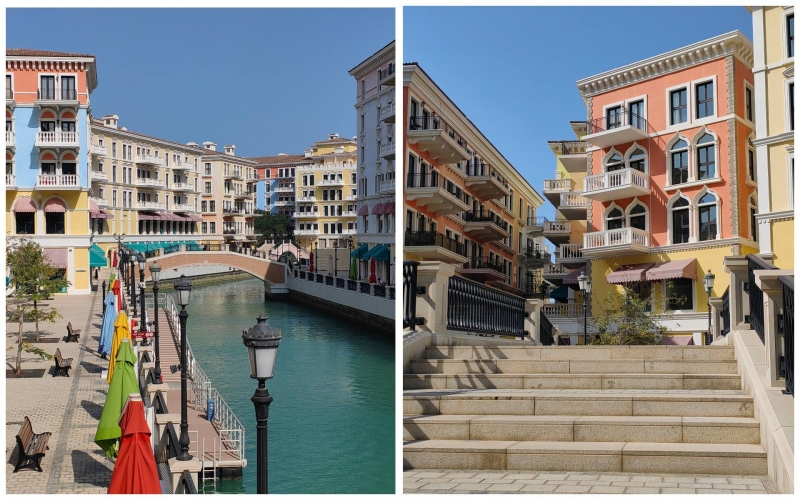
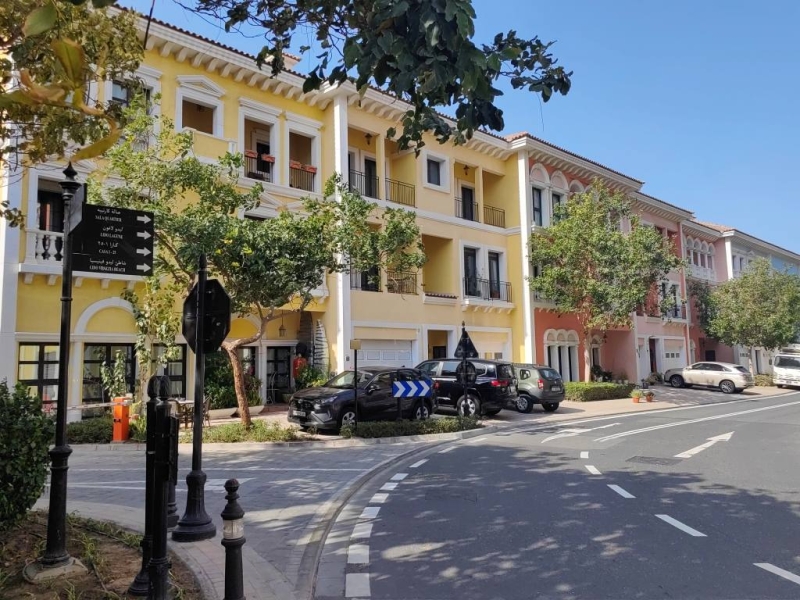
In general, the theme of Italy is somehow dear to the architects of Doha in a special way – and local shopping malls are far from the only example of this. On the artificial archipelago of The Pearl there is a whole quarter – Qanat Quartier – with canals, bridges, galleries, pizzerias and even drinking fountains in the “Venetian” style.
I don’t fully understand this love. But it’s quite pleasant to walk here in the evening.
How to get there?
- Villaggio Mall – Sport City Metro station.
- Place Vendome – Legtaifiya Metro + tram to Tarfat South Station.
Pearl of Qatar – marina and crystal street
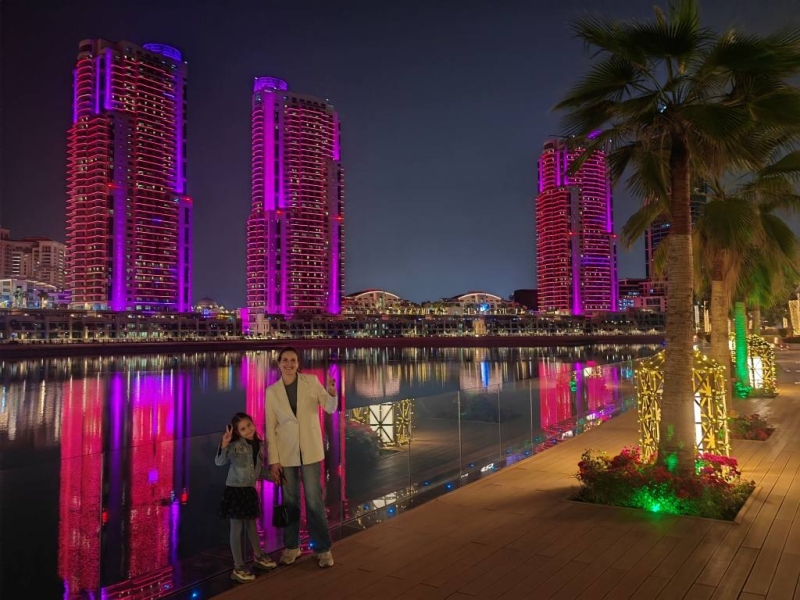
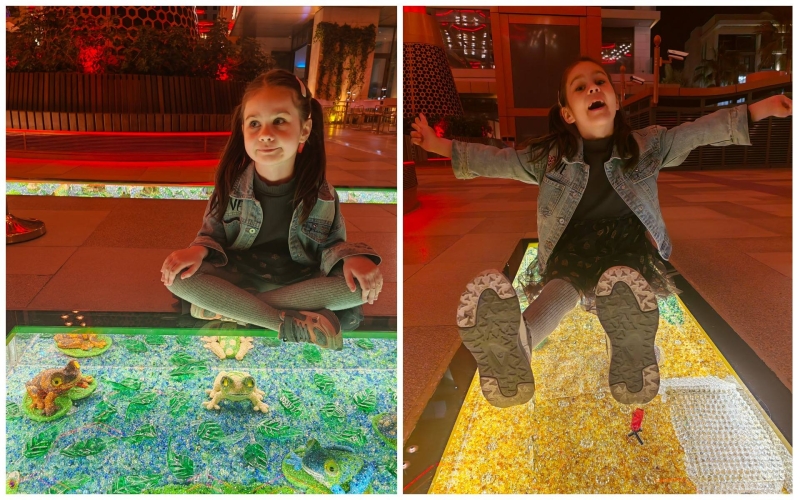
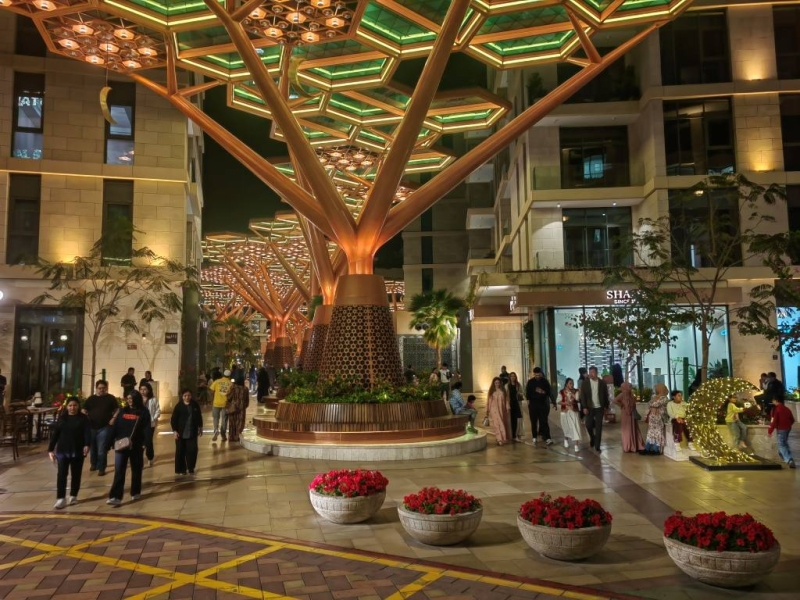
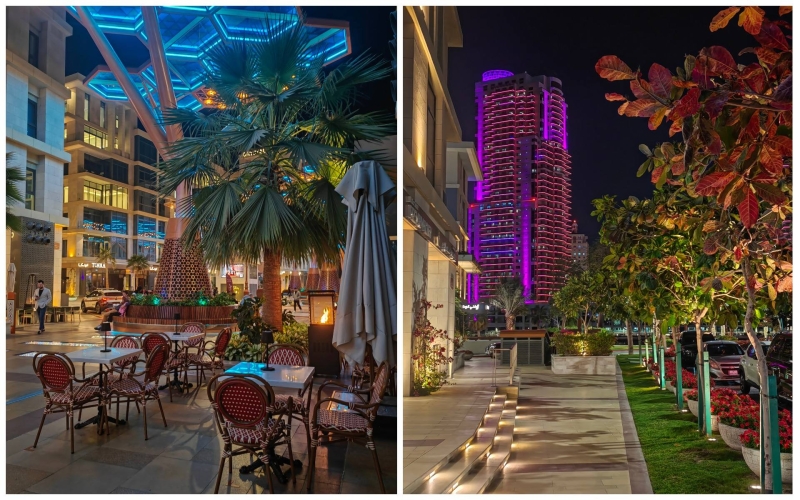
I will not say that the Venetian quarter of Qanat Quartier stole my heart. But come to Pearl Island It’s worth it not only for his sake. There is a beautiful promenade with yachts, a cozy area of townhouses, where mostly expats live, and also a stunning street Crystal Walk, where installations of real Swarovski crystals are scattered right under your feet. They look like small windows, inside of which seascapes or views of the Qatari deserts appear.
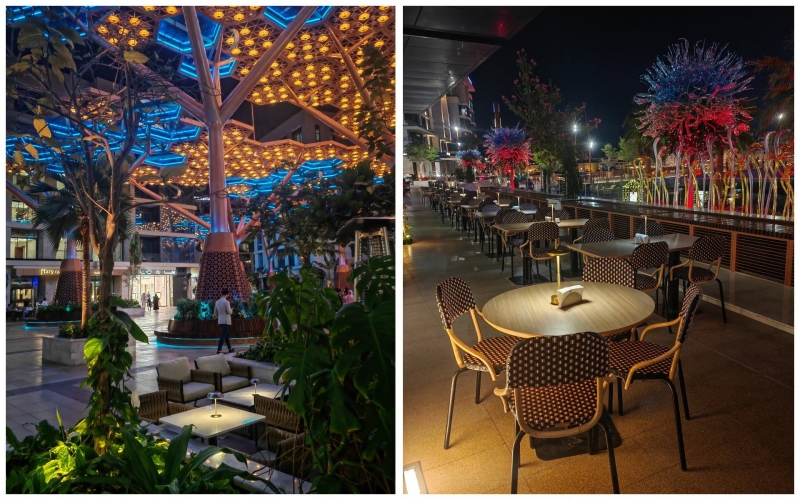
The picture is complemented by huge sparkling trees overhead, air conditioners built into the floor, blown-glass flowers and many cozy cafes that look like tiny oases of greenery. In my opinion, Crystal Walk and everything that surrounds it is one of the most impressive places in Doha. Kristalnaya Street is firmly in the TOP 3 on my personal list.
How to get there? By taxi (Uber or Karwa). Prices are about the same as in Minsk. For 10 km from the West Bay area, we paid 14 QAR/3.7$ (there) + 16 QAR/4.3$ (back).
Alternative option: take the metro to Legtaifiya station, and from there take 1 stop on free Metrolink buses No. 152 (to Abraj bay 3). You need to walk a little way from the bus stop – over the bridge with the Gewan Island sign. But you will most likely get a ride back (since free golf carts run around the island).
Katara Cultural Village: planetarium, fountains and art installations
In general, free shuttles are one of the features of Qatar. They ride through parks, embankments, airport terminals and all the main attractions of Doha.
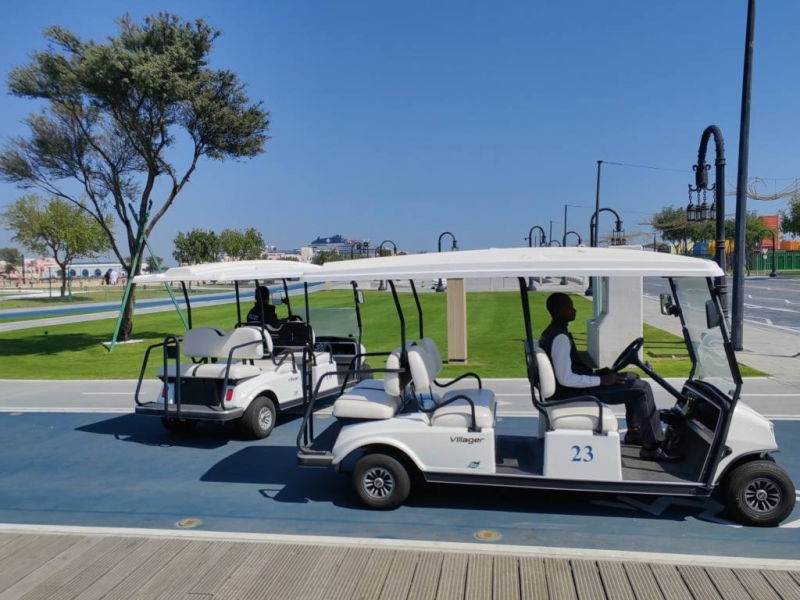
Free shuttle in Mia park (Doha).
In Katara Cultural Village they usually stand by the fountain, behind the Lafayette Gallery. You come up, say “Hello” – and they quickly take you to the right pavilion or interesting place.
And there are a lot of them in the framework of the Katara cultural village. There is a:
- Large Amphitheater;
- Embankment with unusual art installations;
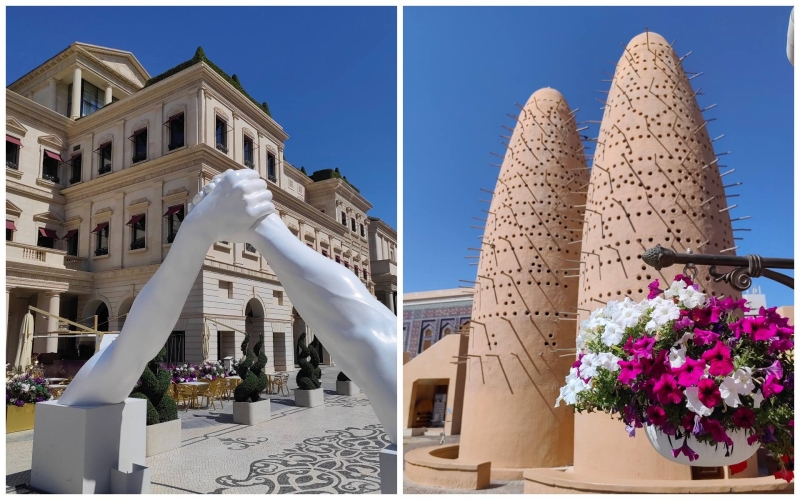
- “Twins” of Pigeon Towers;
- And a very cool alley – with arches in the form of intertwined human hands.
Of course, there are dozens of free museums in the Cultural Village. But to be honest, they’re not the most impressive here. Inside there are collections of postage stamps, rare shells and paintings by local artists.
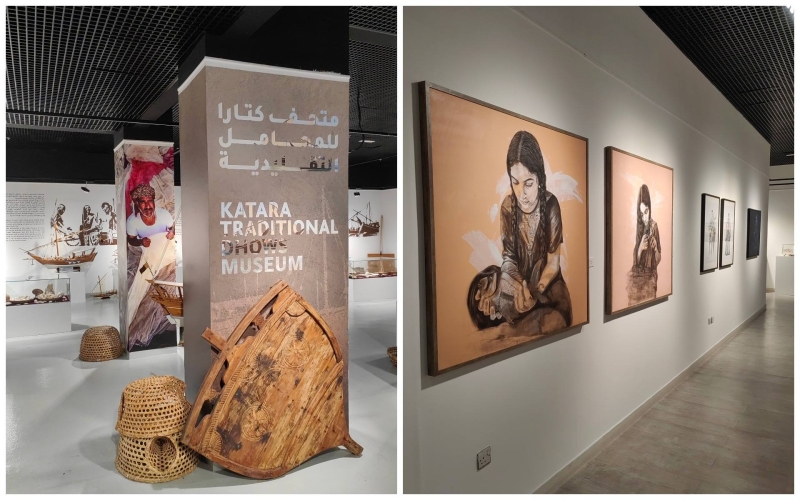
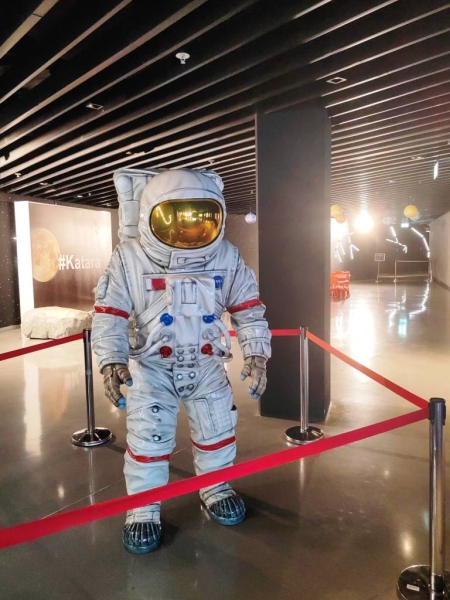
But the availability of a free planetarium pleasantly surprised me. At first, because of Ramadan (and then because of the Iranian attacks), I never got to see the dome cinema. But even wandering around the local exhibition was quite pleasant.
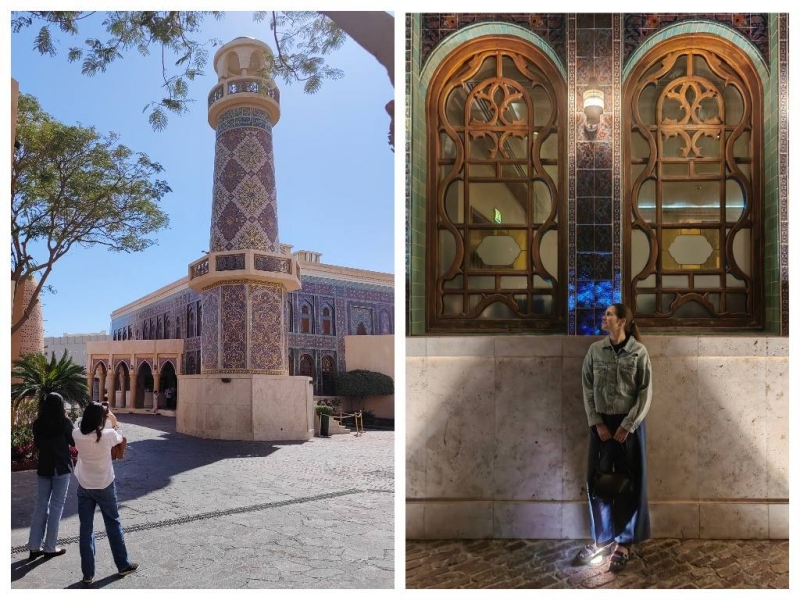
If you come to the Cultural Village in the evening, be sure to watch the fountain show. And if you find yourself here during the day, find two local mosques – Blue and Gold. Sparkling in the rays of the Arabian sun, they look very beautiful. Even though they were built recently, and they are only a year older than my daughter.
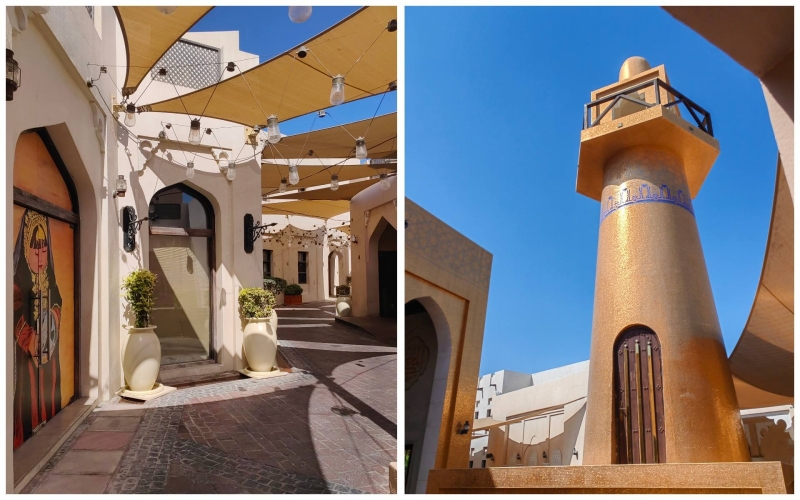
How to get there?
Take the subway to Katara station. The territory of the complex is quite large, so it is most convenient to travel between the pavilions by free golf carts. You can recognize them by the maroon (!) T-shirts of the drivers.
Mina District and 50 shades of pink
After returning home, I read that the opening of Katara Cultural Village was timed to coincide with the Doha Tribeca Film Festival. This is probably why many streets of the “Cultural Village” strongly resemble a film set or specially constructed scenery. You walk here, and it’s as if you feel everything around you literally begging for the camera lens. And there is only one place like this in the whole of Doha.
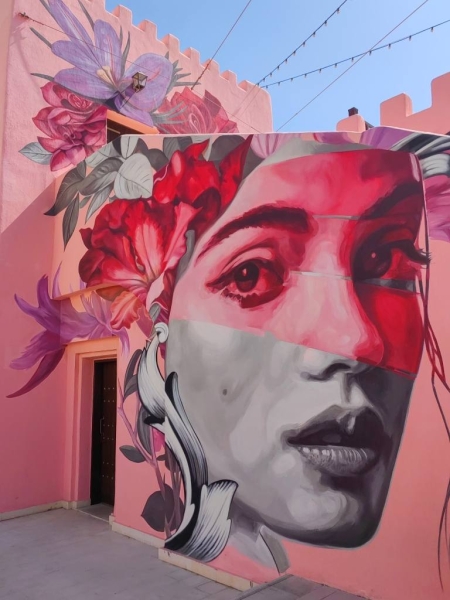
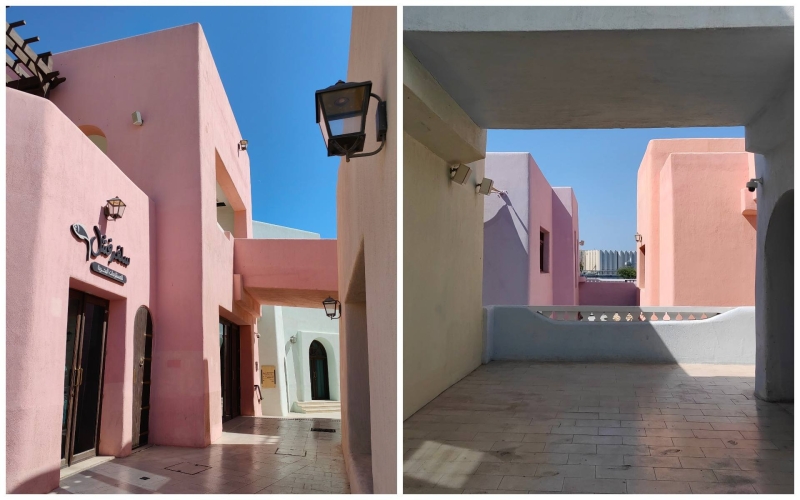
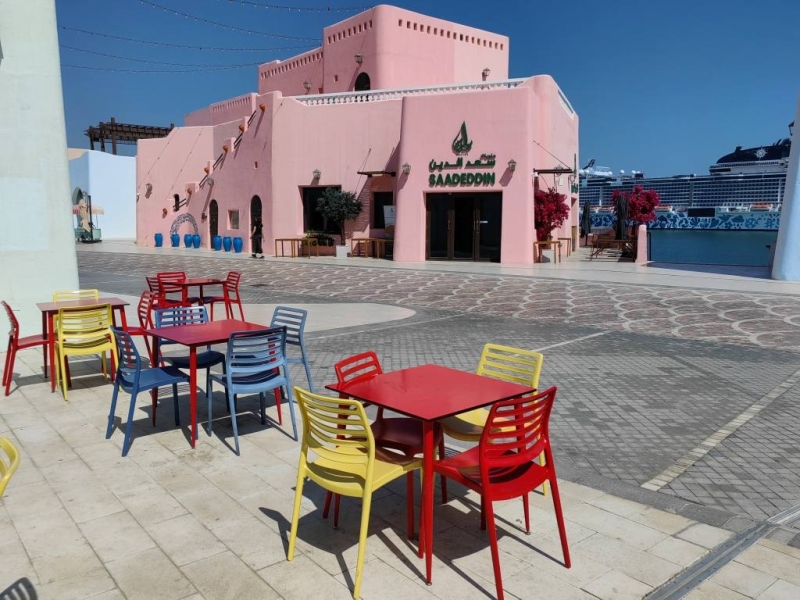
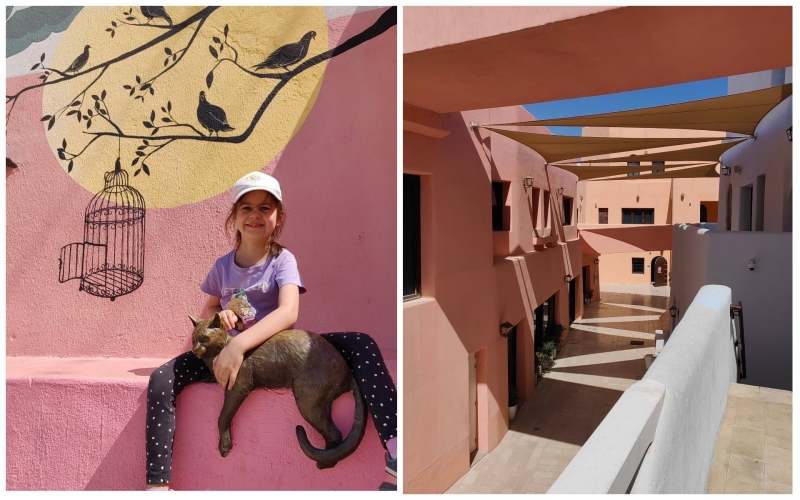
It’s called Mina District. Once there was an old port and a small fishing village. But for the 2022 World Cup, a team of famous designers was brought here, money was thrown at them, and they turned ordinary houses into one of the most striking attractions in Doha.
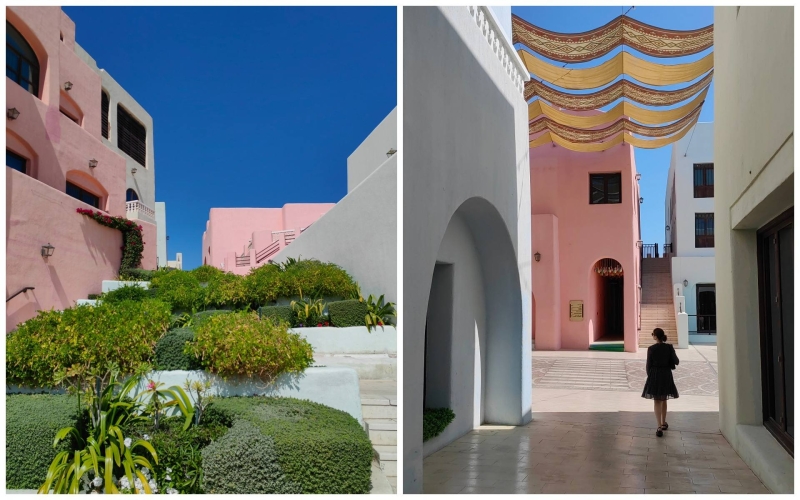
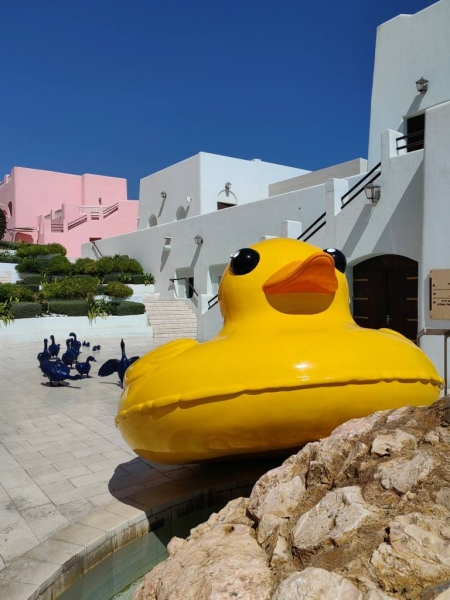
The facades of the houses have blossomed in dozens of shades — from pale blue to sunny yellow. Spectacular graffiti appeared on the walls, and cool art objects (like this flock of geese running after a rubber duck) appeared on the promenade along the sea.
Next are some more photos. I think they will tell you about this place better than any words.
How to get there?
By taxi (Uber or Karwa). The nearest metro station is National museum, 2.5 km away. You can shorten the route a little on those very free golf carts, which I wrote about above. They take tourists around MIA Park, but they have a habit of hiding at the right moment.
Old port, old Hagrid and the best route to the Mina area
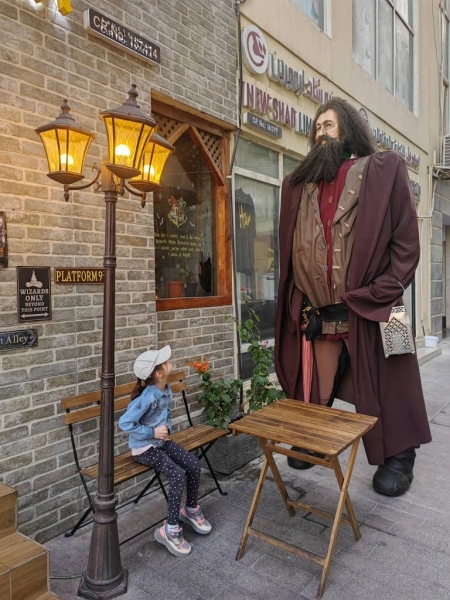
Walking almost 3 km from the subway is not a pleasure. But on the way you will be able to see several interesting places at once. For example…
- Right behind the National Museum there is Hogwarts cafe with cream beer on the menu (35 QAR/10$) and a huge Hagrid at the entrance;
- A little further away is Flag square;
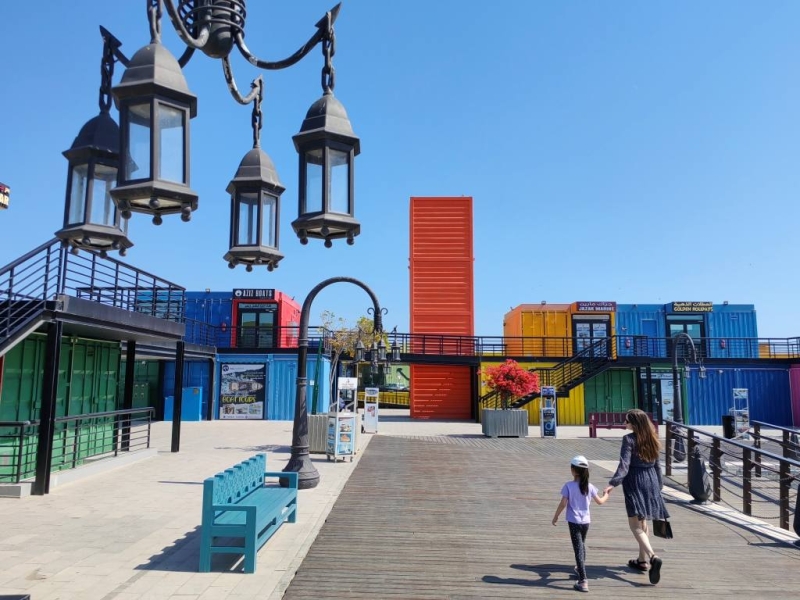
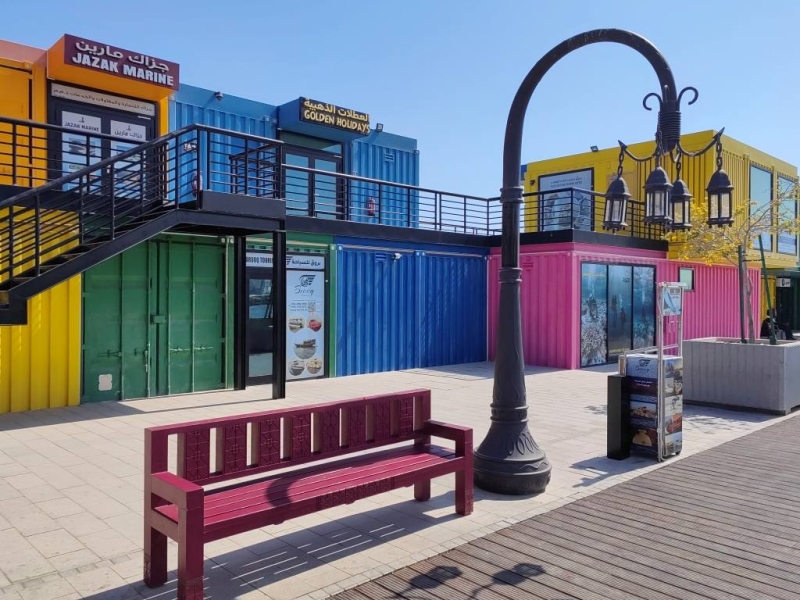
- And exactly one kilometer away there is a cool neighborhood made up entirely of colorful containers (Box Park).
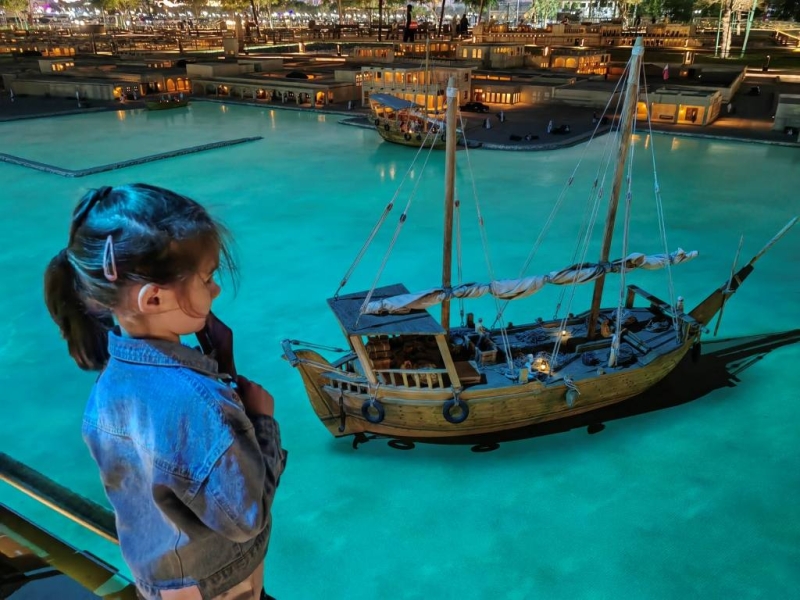
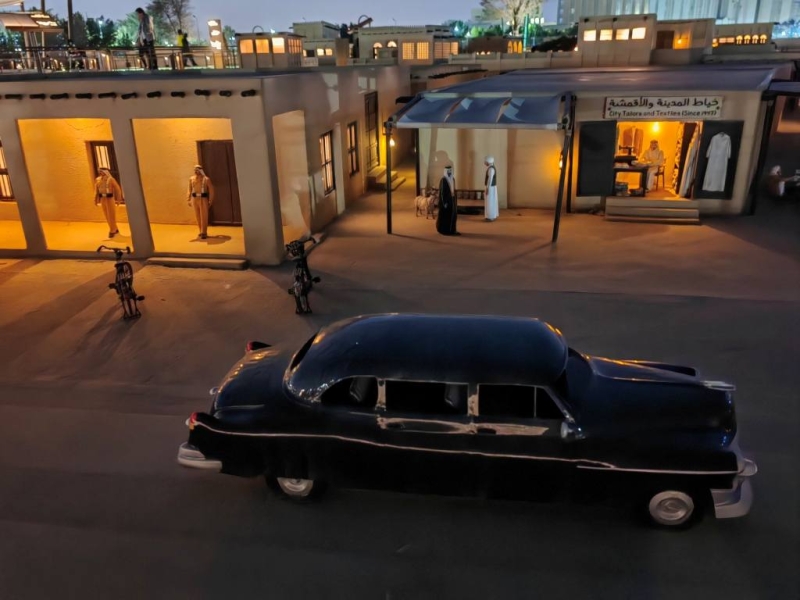
A separate delight is the huge miniature museum, which you will also come across on your way to the Mina District. Admission is free. And inside there are dozens (if not hundreds) of buildings – from police stations to mosques, from seaside marinas to deserted palaces.
It looks especially impressive in the evening – when the lights come on in the tiny windows, the miniature sea is filled with the sound of waves, and the muezzin’s songs are playing over the glowing minarets. I really liked this place.
How to find it?
Hogwarts Cafe – Al Slyaha Street (right behind the National Museum). The other locations mentioned don’t have their own addresses, so it’s best to use the navigator. Enter Flag Plaza, Box Park, and Old Doha Miniature in the search. The last two points are located across the street from each other.
Qatar National Museum
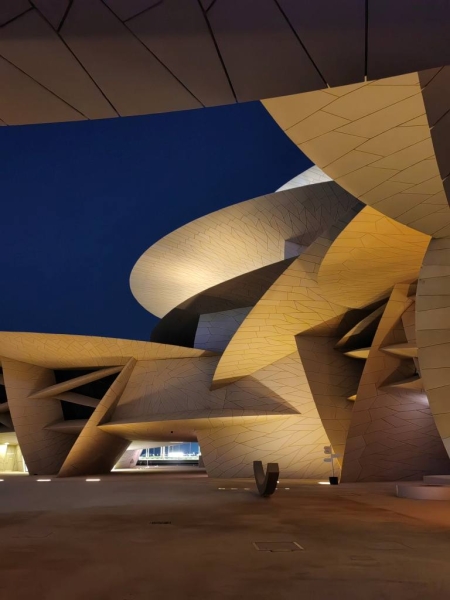
However, the main attraction in the old city of Doha is its National Museum. The building alone, built in the form of a huge “desert rose”, is already a real delight. But inside, it’s just the standard of a modern museum.
There are also space panoramas with the history of the origin of the Arabian Peninsula. And a detailed recreation of the desert atmosphere (with camels, tents and bonfires), conveying the way of life of nomadic peoples. And a large “sea section” telling the story of local pearl fishermen.
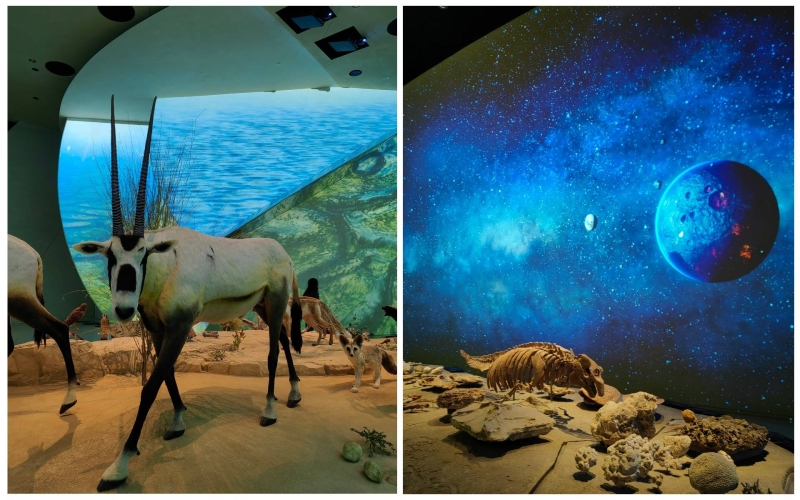
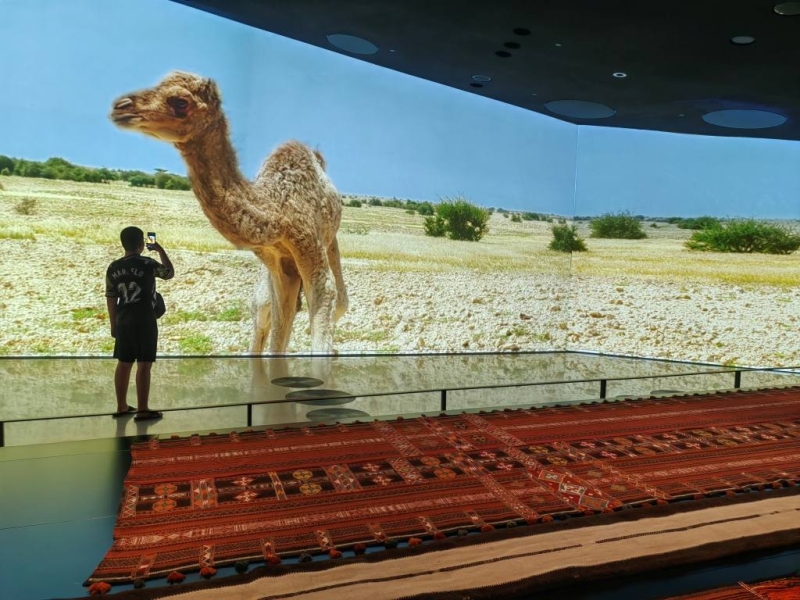
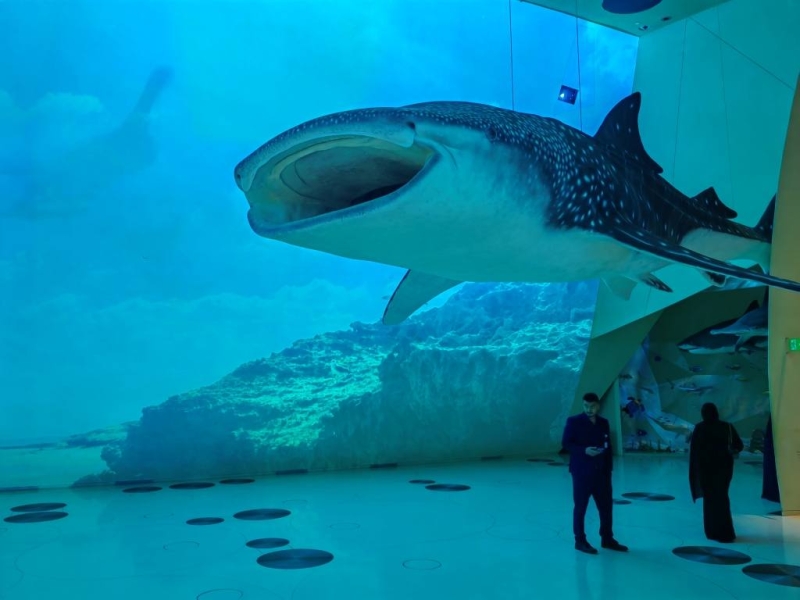
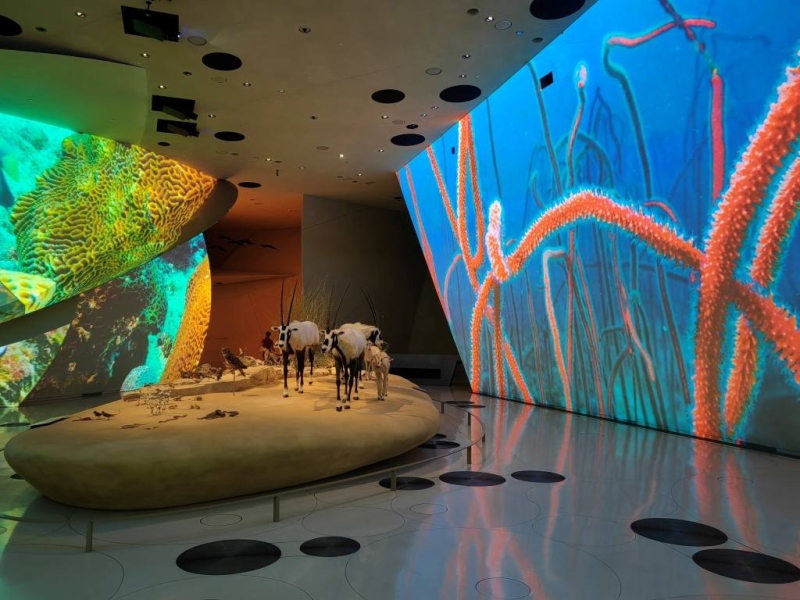
But the main surprise for me personally was the palace of Sheikh Abdullah Al Thani (1906), which (attention!) is entirely (!) located inside (!) The National Museum of Qatar. When I saw him, I just couldn’t believe that such a thing was possible.
How to get there? Take the metro to the National Museum station. You can buy tickets here or at the museum’s ticket office. Both cost the same (50 QAR/12 €).
An example of a hotel nearby. If you are coming to Qatar not for the beaches, but for its cultural heritage, then settling here would be a good decision. So within walking distance (or a couple of metro stations) from you will be all the main attractions of Doha.
Museum of Islamic Art
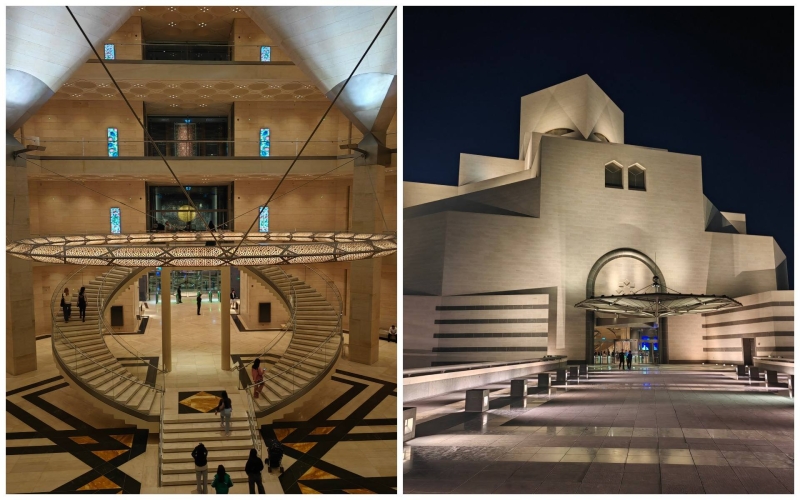
Another stunning Doha Museum is located near the Corniche and is entirely dedicated to Islamic art. It was built according to the design of the American-Chinese architect Bei Yuming (responsible for the design of the Louvre). And today it isa whole world that tells about the masterpieces of the three lost empires – the Ottoman, Safavid and Mughal Empires.
A special feature of the exhibition is the semi–dark halls, where the directional light illuminates only the objects of the collection themselves. Because of this, it’s difficult to photograph there, but at the same time, when you get here, you immediately feel that you are in contact with something magical.
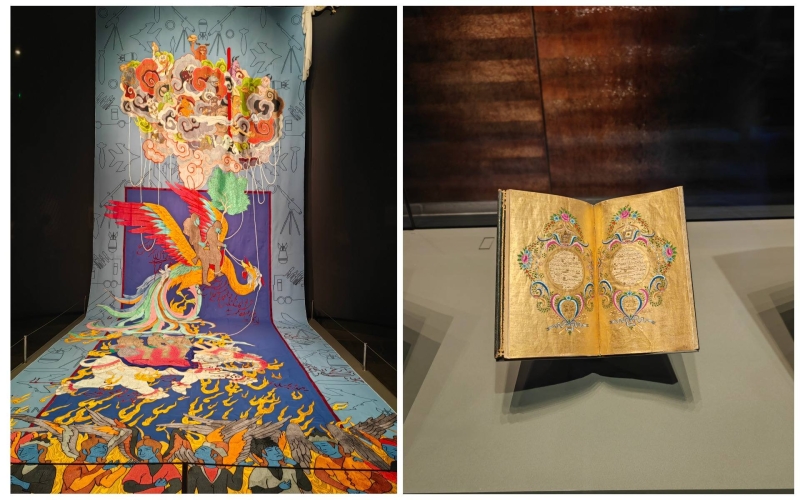
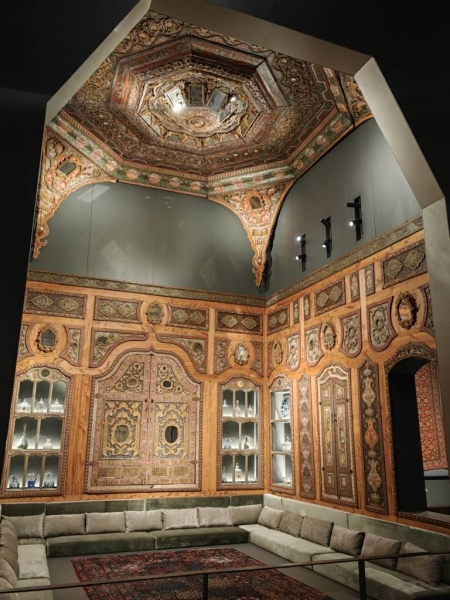
Even if you don’t have much time and you can’t spend an entire evening looking at Persian ritual masks and life–size shah rooms, you should still come to this place. At least for the sake of the local park (MIA Park) and the small Karak Mahil cafe with stunning views of the bay.
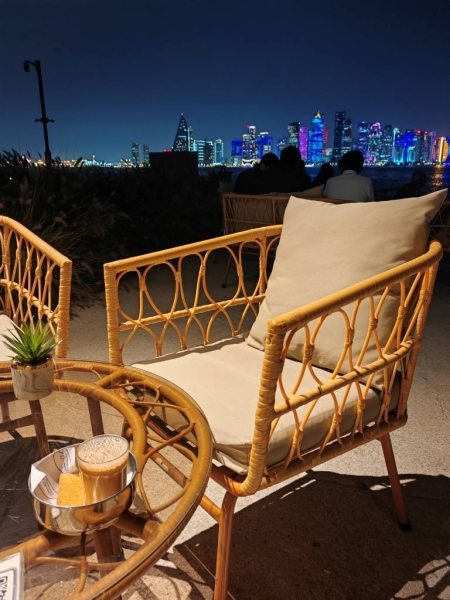
In the evening, we drank karak tea here (for 8 QAR/$ 2.2) and watched the lights of the skyscrapers reflected in the dark water. It was very cool.
How to get there? Take the subway to Souq Wakif Station and then walk 1.4 km. You can buy tickets here or at the museum’s ticket office. The price in spring 2026 is 50 QAR (12 €).
Qatar National Library and Mosque of the 23rd century
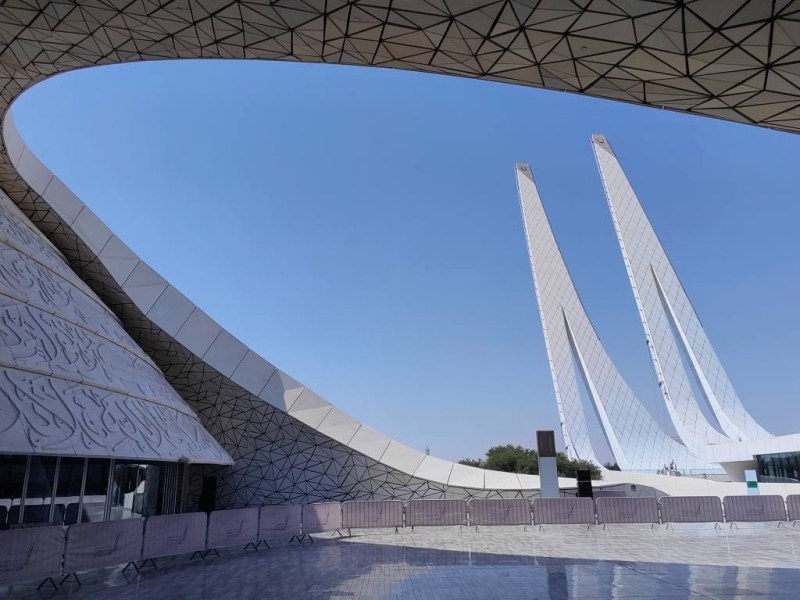
Another impressive place closely associated with Islam is located in the west of Doha, in a large scientific cluster called Education City. It is a huge, state–of-the-art mosque with “floating” minarets and walls dotted with phrases from the Koran, looking more like a spaceship than a religious building.
There is a beautiful garden inside the mosque. And four streams flow right under your feet, symbolizing the rivers of Paradise promised in the Quran. At the same time, you can get inside absolutely for free. All you need is to take off your shoes at the entrance.
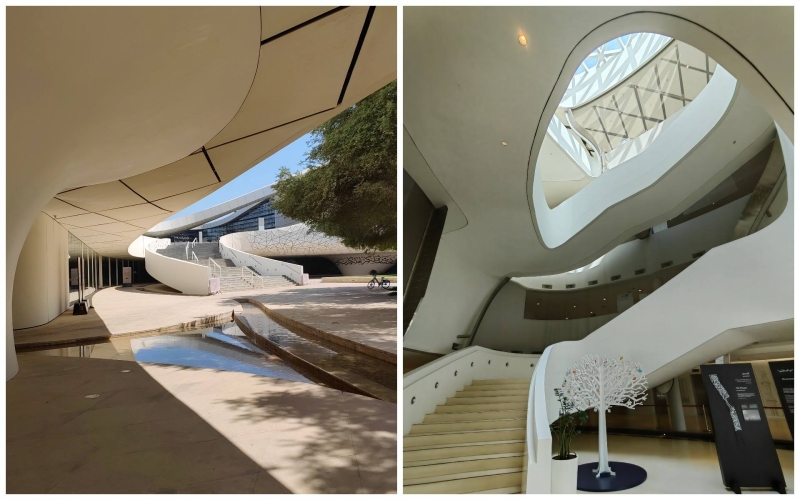
However, the local mosque is only one of the reasons for a trip to Education City. Next to it is the Museum of Modern Art (Mathaf) and the Lawh Wa Qalam Museum (with animated paintings by artist Maqbool Hussein).
Both museums are very interesting and free. As well as the Qatar National Library located nearby. Inside there are hundreds of thousands of books and several spacious halls. The usual books are on the top floor. Rare volumes are on the lower tier.
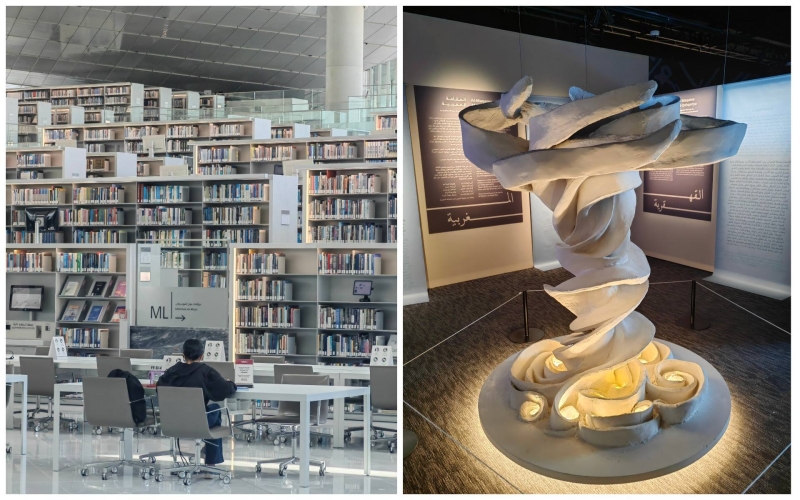
Also noteworthy is…
- the local botanical garden, where all the plants mentioned in the Quran are collected;
- the interactive museum Media Majlis, dedicated to media and journalism;
- and even the academic buildings themselves – with gazebos by the water and air-conditioned capsules, in which it is comfortable to prepare for classes during the summer heat.
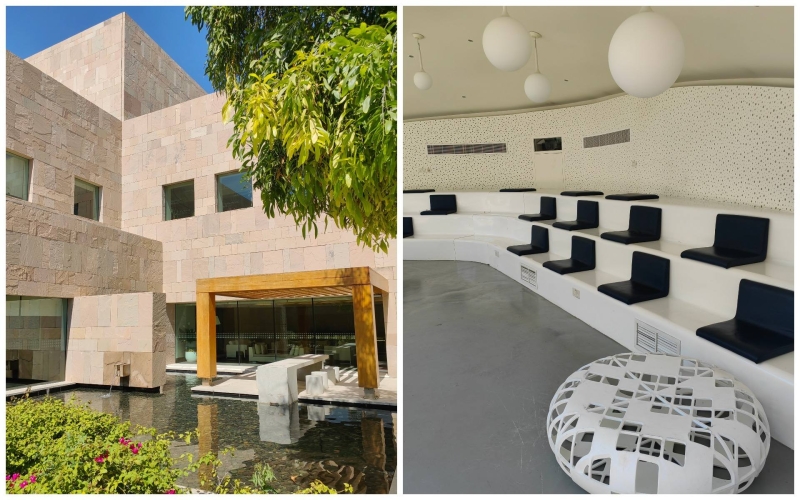
Education City probably cannot be called one of the main attractions of Doha. But if time permits, it’s definitely worth a visit.
How to get there? Take the subway to the National Library station, and then walk or take the free tram.
Bonus. Lusail
Technically, this is a different city. But in reality, it’s easy to get here by metro. In 2006, Lusail began to be built as a state-of-the-art megacity of the future. But in reality, something went badly wrong.
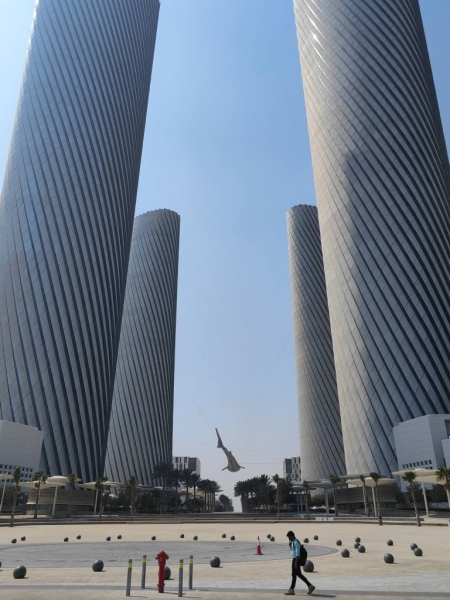
Yes, there is a beautiful boulevard (with steep skyscrapers and a shark soaring in the sky), there is a great promenade by the sea, and even its own tram, more like a surface subway system. But THERE ARE NO PEOPLE HERE – and this circumstance makes a very strong impression. Imagine a whole city where only you are and a guard guarding the sea. Whether to go here or not is up to you to decide for yourself.
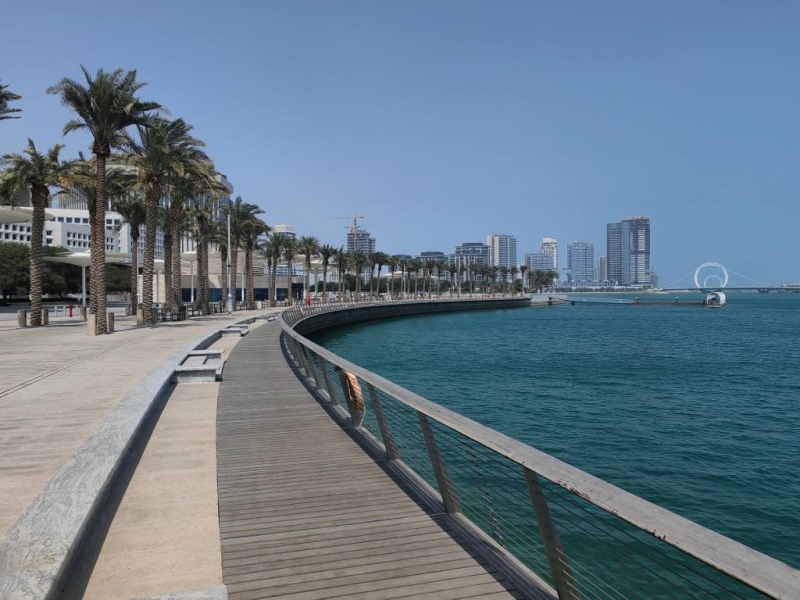
On the one hand, you can cut content in proud solitude against the backdrop of the horned towers of the Katara Towers complex. On the other hand, a world without people still looks surprisingly uncomfortable, no matter how sparkling the buildings around it might be.
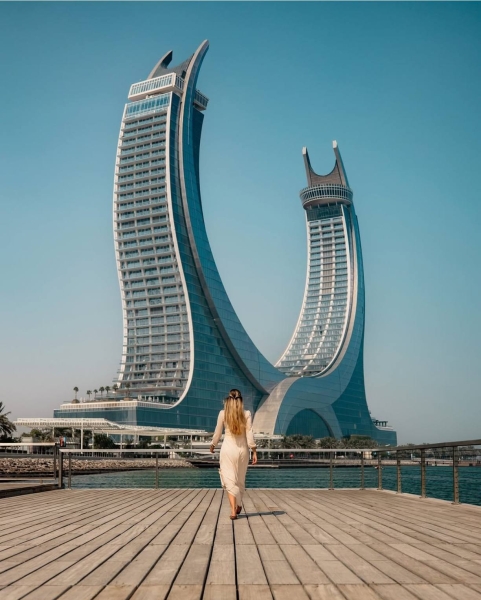
Photo by Mark Daniel. The model is Judith Maria. Source — @travelmonster.nl .
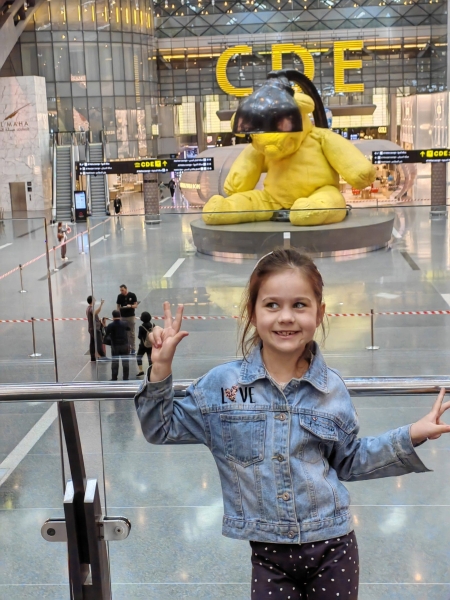
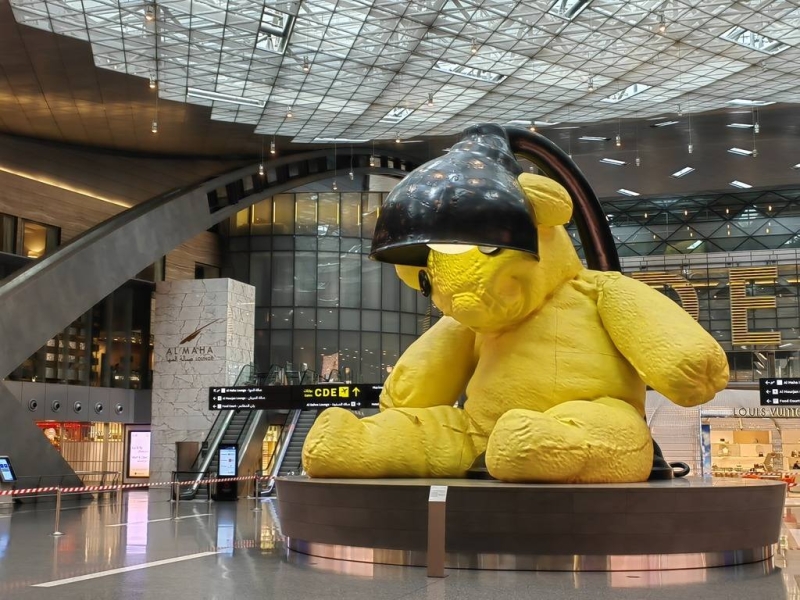
So take care of the planet and don’t shoot at each other. I hope the conflict in the Middle East will end soon. And Qatar will once again be associated only with stunning museums, great beaches and a yellow bear in the center of its super-modern airport.